|
One Lost
An Airman's Story

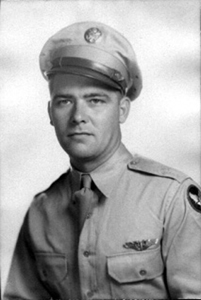
Cpl. Delbert W. Trueman
By Kim Clarke
ã Kim
Clarke
Please request permission to reprint
kdclarke@umich.edu
302 Oak St.
Ypsilanti, MI 48198
Introduction
For the fourth straight day it was
raining in Marion.
It was warm for late January in northeast
Indiana, and the weather danced between rain, a stinging sleet and snow
flurries. Anyone walking outside did so
quickly, head tucked into chest.
It was freezing rain that greeted the
Pennsylvania Railroad's Fort Hayes as
it pulled in to Marion's train station shortly before lunchtime. Three hours out of Columbus, Ohio, the
passenger train was halfway through its daily run to Chicago. Marion was one of a dozen small-town stops
the Fort Hayes made as it bisected
Indiana.
Passengers stepping off the train most
likely didn't notice the hearse from Raven Funeral Home idling alongside the
brick station. While people made their
way from the coaches into the wet day, a uniformed soldier moved from his seat
to the baggage car. Once there, he met
up with the owners of the hearse.
Together, they lifted a casket and carried it to the funeral car. It was surprisingly light.
More than four years after spiraling to
his death aboard a crippled bomber in the skies above Vienna, Cpl. Delbert
Trueman was home. It was January
1949. A small headline in that
morning's paper, "Plan Services for Soldier," announced his return. The funeral, the paper said, would be the
next day. Rain, possibly snow, was in
the forecast.
Brothers in Arms
It had been a lousy month in Manduria,
Italy. Seventeen days into October of
1944, and the 450th Bomb Group had been able to fly only six combat
missions from its home base northward into Nazi-controlled territory. Rain and a continual blanket of clouds kept
the group's B-24 bombers grounded; it was particularly annoying given how
American air crews had shipped to Italy in late 1943 because it offered better
weather than the fog that continually trapped the Eighth Air Force in England. But this morning they were going up, and
Delbert Trueman was preparing for his first bombing run into enemy territory.
It had been a long, tiresome road that
took Trueman from the small Indiana town of Marion to the olive groves of the
air base in the heel of Italy's boot. Enlisting was never in his plans.
War
had, of course, come to Marion. The
bombing of Pearl Harbor rattled the town, with newsboys yanked from their seats
at Sunday matinees to deliver special editions of the Marion Chronicle; a former
paperboy, Wendell R. Hurley, was among those to go down with the USS Arizona. Day after day, local men signed up and shipped off to basic
training camps around the country.
Others were drafted, tapped by a local selective service board put into
place more than a year earlier when President Franklin D. Roosevelt began
calling up able-bodied men anywhere from 18 to 35; Germany's ransacking of
Europe was under way. "We must and will
marshal our great potential strength to fend off war from our shores. We must and will prevent our land from
becoming a victim of aggression," he told Americans.
The draft spared Trueman. He was married
with a young daughter and, while eligible to be called, he and other fathers
were passed over in favor of single men in town. Life went on amidst the rationing of food and the collecting of
rubber, tin and grease. Delbert crisscrossed the city as a meter-reader for the
local electrical company and his wife, Virginia, worked as a bookkeeper. They went out on Friday nights to watch the
Marion High School basketball team; in the mid-'30s, Delbert had lit up the
court as a star guard who played well enough to land a scholarship to Butler
University, 60 miles south in Indianapolis.
Saturday nights were spent playing cards with friends.
Marion had always been home. While born in Danville, Illinois, a city
wedged along the Indiana border, Delbert grew up in Marion. He was the oldest child, a big brother to
three siblings. He made a name for
himself in high school, appearing regularly on the sports pages as he steered
the varsity basketball and football teams to victory in a town that entertained
itself with the exploits of the Marion Giants.
He was ramrod straight, both on and off the field. For all his popularity, from his pick as
president of the junior class to receiving the school's top athletic award,
classmates still voted him "most bashful."
No one would ever accuse Del Trueman of being wild.
His brother Dale followed him. Two years apart, the boys were closer in age
than were their sisters. Like Delbert,
Dale was an athlete. After high school
and the basketball team, he suited up as a left wing for the Idyl Wyld Roller
Hockey Team, a group that would bring Marion a small measure of fame as state
champions. His nickname was
"Stud."

Delbert
Trueman (center) flanked by his younger brother, Dale and their father, Paul.
It was Dale Trueman who first went off to
war. He already knew about flying,
thanks to a Piper Cub he kept at the Marion Airport. He enlisted in the Army Air Corps in June 1942, seven months
after Pearl Harbor and six weeks after Col. Jimmy Doolittle and his B-25
bombers scored America's first serious blow against Japan by emptying their
bomb bays over Tokyo. Dale Trueman
would be a military pilot himself. He
moved from his Piper Cub to the Air Corps' trainers – the Curtiss AT-9, a
tricky plane known for giving new pilots a challenge with its twin engines, and
the Beech AT-10, a more advanced trainer.
By February of '43 he was wearing gold – two bars as a second lieutenant
and a band around his finger as a husband.
By June, he was piloting B-24 Liberators, heavyweights that carried a
crew of 10 and just as many 500-pound bombs and .50 caliber machine guns.

Dale
Trueman after graduating from flight school and becoming a second lieutenant.
From his air base in Salinas, California,
he mailed home a magazine's drawing of a B-24, drawing a circle around the
cartoonish pilot and scribbling "ME." A
few more weeks of training and he would be on his way to England as part of the
Eighth Air Force.
Instead he was a victim of bad
timing. After nine hours of nighttime
flying along the California coast in early July, he prepared to land his B-24
near Bakersfield. One of the plane's
four engines – the No. 2 powerplant on the left wing – had a bad propeller and
he shut it down. Gages indicated the
remaining engines each held 50 gallons of gas, a trickle compared to the 2,900
gallons the plane was built to carry.
The radio operator's attempts to contact the ground for landing
clearance went unheard, and no one in the tower saw the plane as it lumbered in
the clear black sky. The No. 1 engine,
the only thing keeping the left wing aloft, ran out of gas. The plane plunged to the ground and burst
into flames that lit the air. Two
crewmembers managed to escape the burning wreck. Seven men, including 24-year-old Dale Trueman, died instantly;
they joined the 40 percent of airmen who washed out of training because of
something so innocent as bad eyesight or so perverse as running out of fuel
4,000 feet in the air.

The Marion newspapers carried reports
of Dale Trueman's death.
The war suddenly came home to Delbert
Trueman. He and his family were
preparing to leave the house for a matinee when the phone rang.
"He was pretty broken up. They were only a couple years apart," said his wife, Virginia.
"We were home on a Sunday afternoon when they called. When he called up to his parents' home, he found out that his dad
was playing golf, so he had to go out to the golf course and tell him."
1944
No one wanted him to sign up. He had a wife and 6-year-old daughter to
think of. He was now his parents' only
son.
But someone, he argued, had to carry
on for his brother. Someone, he said,
had to pay for his family's pain.
"He didn't seem to be angry. He was hurt more than anything. He was just hurt," his wife would recall,
"like he felt he had to do something to take Dale's place."
A week before Thanksgiving of '43,
Delbert was deemed qualified to be an aviation cadet and he told Marion's
Selective Service Board he wanted to volunteer; like his brother, he was going
to be a pilot and indicated he would serve with the Army Air Forces. A month later, he drove north to Fort Wayne
and enlisted. The Army noted he was 26,
standing 5 feet 8 inches tall with blue eyes and brown hair. When reporting for duty in the new year, the
Army told him, he should show up with the clothes on his back, an extra pair of
underwear and socks, a razor, shaving cream, toothbrush and toothpaste. And be sober.
America was two years into its war
with Germany and the Axis powers, with Europe as its primary combat theater.
Since early 1943, U.S. and British military leaders had made it clear that the
destruction of Germany was paramount.
An air combat strategy known as the Combined Bomber Offensive directed
U.S. and Royal Air Force flyers to go after the engine of Hitler's war
machine. Their targets: factories
producing aircraft for the Luftwaffe, ball-bearing plants, oil refineries, and
fortress-like pens holding the German U-boats that routinely torpedoed Allied
vessels in the Atlantic.
Essential to the offensive were
heavy bombers, aircraft that could carry thousands of pounds of ordnance deep
into Germany and the neighboring countries it occupied. The B-17 Flying Fortress and the B-24
Liberator led the offensive. Each was
heavily armed and capable of carrying a crew of 10; where the sleek Forts flew
higher and held up better against enemy flak, the chunky Libs went faster,
farther, and carried more bombs. They
would be escorted into enemy territory by smaller P-51 Mustangs and P-38
Lightnings, nimble fighter aircraft that could fend off attacks by Luftwaffe
pilots looking to bring down the bombers.
Delbert desperately wanted to be
behind the controls of a bomber. His
first choice – like that of so many men joining the Air Forces – was to be a
pilot. It was the glamour job, the
command position glorified in recruitment posters and magazine
advertisements. If not a pilot, he was
told to choose between training as an airplane mechanic or a radio-gunner,
handling both communications and a .50-caliber machine gun to protect the
aircraft.
"I chose the latter," he told his wife.
"It consists of 12 weeks radio school and then on to gunnery school. I certainly hope I don't have to take that,
though. If I don't get through as
pilot, bombardier or navigator, it (radio-gunner) will be satisfactory."
But
before he became anything, he was sore.
And tired. Day after day, he and
his fellow recruits sprinted, scrunched, pushed and pulled themselves through
body conditioning. "I probably won't be able to walk in the morning," he wrote
his daughter after arriving at basic training camp in Greensboro, North
Carolina.
Equally
important to the Army Air Forces was the mental and psychological condition of
its potential airmen. Testing helped
determine who was best suited for which crew position, and who could be trained
the quickest. Examinations were the
norm, with day after day of questions and theories about subjects Delbert
hadn't focused on since high school.
"It couldn't have been much harder," he
said after a particularly frustrating battery of tests. "It was composed of geometry, algebra,
history, physics, English, etc. Really
was a tough one. I'll probably end up
as a gunner. Ha!"
Virginia urged to him to become a
mechanic. It was far safer, as ground
crews stayed behind when the bombers and their gunners took off for enemy
targets.
"I would never make a mechanic, honey,"
he wrote back, "which is the reason (one of them) I chose gunner. I never did care for that kind of work. If I can't make a pilot, bombardier or
navigator, gunnery is my next choice.
"It should be exciting and interesting
and is one way of getting the b------ds that started this and ended Dale's
life. Understand? But don't let's talk of that now. I am not a gunner yet!" he wrote,
underlining the last sentence.
The U.S. Army Air Forces had too many men
who wanted to be pilots and nothing else.
By December 1943, as Delbert was packing what little items he was
allowed to take to basic training, the USAAF had nearly three-quarters of a
million men in pilot training. Yet
somebody had to navigate the bomber, or train as bombardiers to spot a target
from four miles above the Earth, or sweat it out as gunners in the cramped
turrets that looked like blisters on a bomber's aluminum skin. The USAAF turned to novelist John Steinbeck
for help in promoting the team spirit it needed in recruiting and manning its
heavy bombers. All airmen are equal,
Steinbeck would write in Bombs Away,
his detailed 1942 account of aircrew training.
"Not everyone on a football team insists
on being quarterback. He plays the
position he is best fitted to play. The
best football team is one where every member plays his own particular game as
part of the team. The best bomber team
is the one where each man plays for the success of the mission," wrote
Steinbeck.
The Army
Air Forces told former quarterback Delbert Trueman he had a weak eye, put him
on a train and shipped him halfway across the country to Harlingen Army Air
Field at the southern tip of Texas. He
was going to become an aerial gunner, the least prestigious of the Army Air
Forces' "Four Horsemen" that also included pilots, bombardiers and navigators.

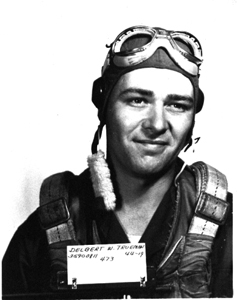
Delbert Trueman at gunnery school.
Delbert
was resigned. His eyes were fine, and
the Army knew it. "Evidently they had
just filled their quota for pilots when they washed me out. It sure is disgusting, to say the least," he
said.
The Army Air Forces' seven gunnery
schools literally left men bruised. For
weeks they practiced shooting, firing everything from 12-gauge shotguns to
mounted .50-caliber machine guns and unloading thousands of rounds of
ammunition. They shot at clay pigeons
and fixed targets pulled by trucks. The
constant, pounding recoil of the guns turned a man's shoulder purplish-blue.
It wasn't until late April, more than
four months after putting on an olive-drab Army uniform, that Delbert first
went up in a military plane, lifting off from a Harlingen runway and heading
south for the Gulf of Mexico.

Delbert, far right, with fellow gunners at Harlingen Army Air Field in Texas.
"Finally got my first mission in this
afternoon. Was up for about 1 hour and
15 minutes in an AT-18. That's a
twin-engine, twin-tail, light bomber, in case you didn't know," he wrote his
wife and daughter later that evening.
"We flew out over the Gulf for about 50 miles and shot 300 rounds apiece
at targets towed by other planes.
"Boy let me tell you that it gives a
fellow a funny feeling when he goes out over that water for the first
time. Of course we wear 'Mae West' life
belts and parachutes in case we would have the occasion to use them. I hope that time never comes, huh? Saw quite a few Mexican fishing boats out
there, as well as an awful large convoy headed for parts unknown. It was an awful pretty sight to see, as you
can imagine."
Still,
he was homesick. At 27, he'd never
really been away from his family and friends; he'd gone off to college with his
basketball scholarship and plans to become a teacher and coach, but quit in his
first semester and hitchhiked home. Now, he tired of the military routine, and
didn't care much for the haircuts and the constant studying. And the shots – vaccine upon vaccine against
smallpox, typhoid, yellow fever, cholera.
He marveled that he could still move his arms.
He wrote
letters almost daily to folks back home, and worried if he didn't see the same
in return. He'd spent his birthday alone, in a base infirmary sick with the
flu. Easter came and went. He ached for his family.
"Well, sweetie," he wrote daughter Judy,
"tell all your grand-folks hello for me and then run over to Mother, grab her
by the neck, pull her down and squeeze to beat the band. Put a big smacker on her kisser, will you? You be good now and write Daddy some more
letters."
In
Marion, Virginia and Judy had moved in with her parents and younger sister, in
the same house where she and Delbert had exchanged their wedding vows eight
years earlier. They had lived modestly
in a rented house before Delbert enlisted but now, without his paycheck as a
meter reader, it was easier to move back home.
Life
also had its lonely moments for Virginia.
None of the married couples they knew was split up by the war like she
and Delbert; no other men had enlisted.
Friends didn't call as often; without her husband, she didn't seem to
fit in with the old crowd. She busied
herself writing letters every day to Delbert.
And she took a job, walking a half-block from home to an electrical
supply company. Since the war's start
and the depletion of male employees, the ranks of Indiana women who went to
work had grown 40 percent. She had
worked in the early years of their marriage, when they struggled to pay the
rent, but now that she alone was raising their daughter and he was gone,
Delbert objected.
"I
thought you were going to forget working unless you just had to. I still believe that you don't have to and
would just as soon you quit," he wrote her.
"I never did believe in your working unless it was absolutely necessary,
you know. I hate to always bring up the
matter of working but, well, that's one of my sore spots."
Still, most of his letters were bright,
and typically to Judy. He'd tease her,
calling her "Bud," "Judy Poody" and "Honey Bunny Boo." He encouraged her to write letters and draw
pictures of airplanes for him. He asked
about school, her grades and was she being a helper for her mother. Please don't cry when I call home, he asked,
because I want to talk with you.
"She
missed him. He was real good taking care of her and real good with her. He loved her very much," Virginia said. "He thought the world and all of Judy."
He mailed Judy presents – cowboy boots, money, a
pistol, a tiny airman's uniform complete with a jacket and service cap. She and her friends were already bounding
through the neighborhood wearing hand grenade belts and helmets and playing
"Army." Nazis and Japs were the bad guys.
Delbert graduated from gunnery school,
earned his silver wings and shipped from Texas to Westover Field in
Massachusetts. The train passed through
Washington, D.C., where he was able to drop a postcard in the mail to
Judy. "Daddy is still on the train …Am very tired and dirty."

Judy Trueman shows off her airman's jacket, wings and cap.
The real training began at Westover. It was here that gunners and bombardiers,
pilots and navigators arrived from their separate schools to be joined as
crews, tightly bound groups of men who would come to rely upon each other for
their lives in the sky. When the air
war began, these groups of men were known as Overseas Training Units, or
OTUs. By the time Delbert reached
Westover in mid-1944, the groups were called RTUs – Replacement Training Units.
The AAF was sending up a staggering number of planes in Europe and the Mediterranean;
in June alone it flew 130,000 sorties, almost half the number it made in all of
1943. Original crews had either been
blown out of the skies or rotated back home, seeing how the Army realized a
fixed tour of duty was best for morale and kept airmen from breaking down under
the strain of combat. RTUs would fill in the missing rosters of overseas
squadrons.
Delbert found himself teamed with men
from across the country: a navigator from Connecticut, an engineer from North
Carolina, gunners from upstate New York and Seattle, Washington, and a
bombardier from Wisconsin. They would
become Crew 272. He particularly liked
his pilot, a solid 6-footer named Lloyd White who came from a rural Tennessee
burg called Hornbeak. Like Delbert, he
was a little older than the other men. "He is about 7 months older than me, I
think. He is a pretty big fellow and
seems to be the kind of a guy who will handle these Liberators with ease,"
Delbert said. He liked that White had
been a flight instructor before moving on to the B-24, a fat-bellied craft
often maligned by aircrews as a "flying boxcar."
Along with his new crewmates, Delbert was
assigned his gear. It was the cusp of
summer, but he and his crew needed clothing and equipment that would protect
them from temperatures that plunged to 50 below zero. At 20,000 feet, the uninsulated and unpressurized B-24s became
flying freezers. Guarding the men
against frostbite and hypothermia were 10-inch-high shearling boots with rubber
soles, pants lined in wool from sheep and alpaca, a leather flying jacket,
goggles with eye cushions, leather flying helmets, and goatskin gloves lined
with camel hair. Also keeping the men
alive were oxygen masks that were essential anywhere above 10,000 feet. It was just short of amazing to expect
gunners to be able to move, let alone accurately shoot down enemy fighters
screaming toward them at 400 mph.
Delbert and Crew 272 did their most
serious training at Chatham Field in Savannah, Georgia, where they were shipped
in troop trains to spend the summer of '44.
For two months they flew as a team: Delbert logged 81 hours of daytime
flying, 22 at night and 26 hours at four miles or higher, all the time
practicing his shooting. He learned that a head cold was murder at 10,000 feet,
and your guts blew up like a balloon the higher you climbed.
But what really wore him down was the
Georgia sun.
"Here it is the 11th of June,
just five months to the day for the Army and myself. And here I sit with the sweat just running off me. Ha!
It's really warm down here and I don't mean maybe. I hate to think of the next two months. Boy oh Boy!" he wrote just days after
arriving in Savannah. The place felt
like a swamp.
But
Chatham Field became more like home to him than any other base. His wife and daughter would spend the summer
with him in military housing, where other airmen
and their families set up tiny apartments and tried to
establish some normalcy in their uniform lives. Another gunner from his crew, Charlie Ward, moved in next door
with his wife and toddler.
It was the only base Virginia and Judy
visited. Ice deliveries were made
daily, and people took their showers in the evening with water heated by the
day's sun. Low-flying Liberators droned
overhead, with gunners waving white handkerchiefs from the plane's waist to
their children on the ground. Pilots
dipped their planes' wings to say hello to their wives. Training missions took them to Cuba and
back.

Delbert and Virginia Trueman and their daughter Judy outside their apartment at Chatham Field in Savannah, Georgia.
When he wasn't flying, Delbert was
training on the ground. More hours of
gunnery, using skeet rifles and machine guns.
He practiced shooting from a simulated turret; his size made him
particularly suited for the cramped bubble that dotted the nose and tail of the
B-24, and straddled its fuselage at the wings.
Small men were favorites as turret gunners, and Delbert was being
groomed as a nose gunner.
Crew 272 jelled. They left Savannah in August and headed to
Langley Field; four years earlier, Langley had borne the 34th Bomb
Group – Dale Trueman's outfit. Now his
older brother was touching down long enough to receive a full set of clothing
and equipment before heading to Europe and, finally, the damn war.
Crew 272 needed almost a month to make
its way across the Atlantic, following the convoluted route the AAF laid out
for its aircrews traveling to Italy.
Their stops read like a fever chart on the atlas: Bangor, Maine; Goose
Bay, Newfoundland; Lagens Field in the Azores, where Lloyd White put the plane
down on metal landing strips and nearly scared his crew to death; Marrakech,
French Morocco. It was in North Africa
where they stopped and waited to hear where they were headed next.
Combat
was still a continent away, but it was close in other ways. The men were told to write home and tell
their mothers or wives to set aside important paperwork such as birth
certificates and marriage licenses.
"Now make sure you have those things," Delbert wrote Virginia. "If you don't have them, get them
immediately. There is nothing like
being prepared, you know." He had
completed his will before leaving the States.
The men of Crew 272:
Rear (from left) Byron Fish, Richard Kitzman, Lloyd White, Lloyd Greene.
Front (from left) Thaddeus Guzan, Charlie Ward, Charles Kleinhenz Jr., Delbert Trueman, Robert Warner.
Along the way, Delbert kept writing
home. No letters came his way; it was
impossible to forward mail to the moving target that was Crew 272. He began ending letters with a postscript:
"Still love me?" His correspondence was now being censored by his pilot, as was
all of the crew's mail. Writing from
"somewhere in N. Africa," he was
stumped for what to say, knowing anything of interest to his
family would fall under Lloyd White's black marker or, worse, penknife. He was a meter man from Indiana who was
seeing the world and could tell no one.
"Warner,
Greene, Charlie and myself are now sitting here throwing the bull, etc., and
figuring out just how far we all are from home. Quite a ways, let me tell you.
Further than I ever dreamed I would be," he wrote. "I sure wish you
could be along, too, and see everything we have seen. Really interesting. I'll
tell you about it when I get back."
Olive Groves and Bombers
Italy
was a country in transition when Delbert Trueman and Crew 272 flew into it in
early October 1944. It had been more
than a year since Allied forces stormed ashore at Salerno and began wresting
the country from the Nazis, who had held the nation following the surrender of
fellow Axis leader Benito Mussolini.
Working from the boot of Italy, Allied troops fought northward to
Rome. With every push of the ground
troops, the Air Forces followed and established bases and airstrips in the
newly captured southern country.
These
new bases would be home to the Fifteenth Air Force. Since the attack on Pearl Harbor, the USAAF had set up air forces
at home and around the world: England, the Philippines, India, the Panama
Canal, the Hawaiian Islands, Egypt, Algeria, China. Each air force played a different role in the overall drama of
defeating Germany and Japan. The Eighth
Air Force, based in England, was taking the lead in pounding Germany. But more firepower was needed to soften the
Nazi strongholds and manufacturing centers throughout Europe – locations that
were simply too far for British-based bombers – and Italy offered an excellent
strategic setting. From this
Mediterranean location, aircrews could bomb dozens of oil refineries that
produced nearly half of Germany's fuel supply.
The
Fifteenth Air Force would target Germany, Austria and France, and smaller
nations such as Yugoslavia and Rumania.
It was made up of B-24 and B-17 bombers, plus a trio of fighter planes:
P-38s, P-47s and P-51s. When it was
activated in November 1943, the Fifteenth had more than 20,000 men and 931
aircraft scattered across southern Italy in combat groups. Lloyd White, Delbert Trueman and Crew 272
were headed for the 450th Bomb Group and Manduria, a centuries-old
village dotted with olive groves, almond trees and peasants leading horse-drawn
carts.
They
landed on October 8, nearly three weeks after leaving the United States. The base may not have looked like much to
them, but it was a palace compared to what the first crews faced in Manduria 11
months earlier when they inherited an air strip abandoned by the Italian Air
Force. The early days were primal. The rain was incessant, making for a thick
mud that sucked at men's boots and pasted their pant legs as they walked. Enlisted men foraged for lumber and nails to
build barracks; they were wallowing on cots in tents while the officers took up
shelter in abandoned stone buildings that had once housed Italian flyers. Empty oil drums were converted to stoves. Meals were eaten while sitting under trees;
the more fortunate diners found stones to use for tables. Men became woolly with moustaches and
beards, not so much because they wanted to but because there wasn't the time or
place to shave.
No one
spoke Italian and the locals began raising the price of any material the Americans
might need. A haircut could be had for
about five cents, but a light bulb cost 100 times as much. The poverty of Manduria could not be
ignored.
"At
every turn we are assailed by groups of ragged and dirty children asking for
matches, candy and chewing gum. 'Allo Joe, chewing gomma. Allo Joe, chewing gomma'," mused an officer
as he began recording the 450th group history in December 1943.
Barracks at the 450th Bomb Group base in Manduria, Italy.
By
October 1944, Manduria was an established base to more than 2,200 men. Local stone masons had been hired to erect
barracks. Each of the four squadrons
that made up the 450th had erected a day room, a place where men
could relax, write letters and have a drink; the day rooms complemented an
officers' club that served cognac for 30 lira, or 30 cents, and champagne for
110 lira. The squadrons took up sides in athletics, with basketball and
baseball teams sprouting up. Boxing was
a favorite among the men, who went crazy when boxing great Joe Louis and other
fighters staged a few rounds at the airbase.
Other entertainment came in the form of nightly movies and the
occasional touring show; song-and-dance man Jack Haley stopped by to deliver an
evening of music and comedy, although the women who joined him on stage were a
bigger hit with the crews.
The
laughs were welcome, and necessary. The
450th had been engaged in heavy combat since droppings its first
bombs in January. B-24s were lifting
off regularly for marshalling yards and oil refineries, and not all
returned. The 450th and
other groups from the Fifteenth took a particularly strong pounding whenever
they flew to Ploesti, a Rumanian city lined with oil refineries; flak from
German anti-aircraft guns was always fierce and accurate. Men lost friends who only hours earlier sat
beside them at breakfast; officers learned to write compassionate letters to
mothers and wives. "We have grown
accustomed to missing faces at the group club bar. Is the group getting heartless?
No! We are becoming reconciled
to the realities of war and seasoned to the outcomes of combat," wrote 1st
Lt. Arthur Campa as he recorded the 450th's daily activities.
The
group was also accustomed to replacement crews like Crew 272. No sooner had Lloyd White touched down at
Manduria than his men were taken from him, if only temporarily. It would be suicide to send a new crew into
combat; no amount of training could simulate the noise and smell and terror of
the real thing. Green crews were always
split up, sent off to orientation and teamed up with instructors; they were
then assigned to fly with seasoned crews until they had a few missions under
their belt. Crews then
reassembled. Once a man had flown 50
missions, he was eligible to go home.
Eight
days passed in Manduria before Delbert was assigned his first combat
mission. Twice before in that week,
missions had been aborted because of bad weather. Just two days earlier, on a run to bomb a railroad bridge in
Yugoslavia, eight men had been killed; Lloyd White's best friend was among
those who died. Members of Crew 272
could only train and wait for their first encounter with the enemy.
B-24 Liberators fly over the olive groves of Italy.
It was
the evening of October 16 when Delbert joined other airmen gathered in the
briefing room to hear about the next day's mission. They always got their assignment the night before. He learned he was going up, and he blanched
when he heard the target: Vienna. The
most heavily defended European city outside of Berlin. They were to bomb the Osterreichische
Saurerwerke, a factory that produced engines for German Army tanks. Crews hated
flying to Vienna because the flak was so accurate and so thick it turned the
day black. It didn't take much to bring
down a B-24, or cause it to explode in mid-air; a shard of red-hot flak was the
Nazis' stone for the Goliath-like Liberators.
Delbert turned to Charlie Ward, his friend and fellow gunner from
Savannah, and stared in disbelief.
Charlie took one look and thought he read his mind: I'm not coming back.
That
night, Delbert wrote a letter to his wife.
It was one of the few times he addressed his mail to her and not their
daughter. He said nothing of the next
day's mission; rather, he talked about how he and the other men were building a
home for themselves. "Worked all day
today and really made progress. In
fact, we are having some Italians lay our floor for us tomorrow eve. That's one job we didn't want. Too much concrete to mix and pour…I guess
tomorrow we also are putting on the roof, too." He added he was feeling a bit down because he had yet to receive
any mail from home since arriving in Italy.
"Gosh,
there just isn't anything to write about tonite so I will quit. Say hello to all for me and have them
write. Bye bye sweet and don't forget I
still love you very much and always will.
Write me now."
That
night, the men assigned to mission No. 158 to Vienna tied white towels to the
foots of their bunks. It was their way
of signaling they should be awakened early to fly the next morning.
Mission 158
The
Fifteenth Air Force had been bombing Vienna and its suburbs since the spring of
'44, chipping away at airplane factories, armaments plants and oil refineries
on the city's outskirts. By early fall,
the B-24s were unleashing their bombs on the center of the Austrian capital.
The
city, often thought of as the cultural heart of Europe, had become an
increasingly important target. With the
Allies' successful invasion at Normandy in June, and the consequent liberation
of Paris and Rome, Hitler's hold on Europe was failing. As Allied troops moved closer toward
Germany, the Nazis withdrew to Europe's interior, shifting men and equipment to
cities like Vienna. By the fall of '44,
200 heavy flak units were stationed in Austria, with more than a quarter of
them in and around Vienna. Close to 450
guns of varying firepower were trained on the skies above Vienna.
Austrians
were in an emotional quandary. Germany
had absorbed their country with its self-proclaimed Anschluss, or union,in
1938. Many had little love of Hitler,
and cared less about taking up arms to defend his cause. But they could not stand by while their
neighborhoods and businesses, their capital and its rich history, were being
blown to bits. When the bombing began,
teenaged boys as young as 15 manned the powerful flak guns, which propelled
grenade-like shells that exploded four and five miles above the Earth.
It was
into this maelstrom that American bombers regularly flew. Three and four times a month, the Fifteenth
Air Force attacked Vienna. There was no
way to avoid the clouds of flak; what was important was not taking too many
hits. Some bombing runs were more
successful than were others. A mission
in August saw two dozen Liberators enter Vienna, with only 15 returning; nine
bombers and 90 men disappeared in the course of 20 minutes. The 450th Bomb Group sent 43
Liberators to the city the day before Delbert arrived in Manduria; 27 returned
pockmarked and damaged, with another five lost or missing.
Twenty-eight
crews were scheduled to lift off for Vienna on October 17. It was always quiet on the morning of a
mission. Men were rousted at an ungodly
hour, dressed, ate breakfast if they could, attended a briefing and made their
way to the planes. Before leaving the
barracks, they placed their personal items in a pile on their beds. No one knew if he would again need his
wallet, or family snapshots, or books.
This day was no different.
Delbert
would fly with strangers. He was the
new man and they were the veterans, even though some were nearly a decade
younger than he was. Seasoned crews
didn't like flying with newcomers.
Green flyers disrupted a bond that was forged in combat, a sense of reliance
and trust that was now weakened by someone whose skills and reactions were unknown. Replacement crews also were flesh-and-blood
reminders of men who were gone.
This
crew had seen plenty of combat, although they themselves were cobbled together
from other crews. The pilot was Lt.
Leonard Mojica, a 24-year-old Californian who was joined at the controls by his
co-pilot, Second Lt. Marvin G. Niederjohn.
Between them, the men had flown more than 70 missions. Joining the pilots were two others who had flown
dozens of missions with them: radio operator and gunner Robert Davis from upstate
New York and baby-faced waistgunner Elvin Killingsworth, a teenager they called
"Killer." The four men had been flying
together for months, and felt a certain camaraderie. Rounding out the crew were George Webb, who would determine when
the bombs should be released; Joseph Marallo, an engineer and top turret gunner
who was three missions away from a ticket home; 20-year-old gunner Richard
Conkle; and Richard Pinardi, a photographer who moved from crew to crew to
record the damage inflicted by the 450th. He was on his 22nd mission.
Delbert's
crewmates from Crew 272 were scattered; only fellow gunner Cpl. Charles
Kleinhenz, who they called Junior, would join him in this plane. They had trained together since Greensboro
and Harlingen. Today they were in
reverse roles: Trueman, a nosegunner, was assigned to the tail turret's twin
guns, while Kleinhenz left the familiar confines of the tail for the nose
turret.
It was
alongside the tail of the plane that Delbert found himself talking with gunner
Bob Davis. They quickly learned they
had something in common as the only married men on the ship, and that
connection seemed to ease Delbert.
Mojica was, technically, married, but he had a girlfriend on the East
Coast and was preparing to divorce his California wife once he got home. Delbert was anxious, and asked Davis, a
veteran of 28 missions, what combat was like.
Don't worry, Davis assured him, October 17 is my wife's birthday and
nothing bad will happen on her big day.
Delbert trains in full gear – flying jacket, oxygen mask and goggles.
They
climbed into a B-24 that had been manufactured two years earlier in Ford Motor
Company's sprawling Willow Run factory outside of Detroit; it was among the
first wave of Liberators produced at the plant under the critical eye of
Charles Lindbergh, hired by Henry Ford as his engineering consultant. Plenty of B-24s in the 450th bore
provocative nose art with painted names like "Booby Trap," Bachelor's Bedlam"
and "Ten Fighting Cocks." Bob Davis liked to say the paint wasn't even dry
before the planes were shot down. The
B-24 they boarded was anonymous, known only by its serial number of 42-51566.
They
would leave Manduria at 8:30 a.m., rendezvous above the base with the 376th
Bomb Group and head north to San Vito D'Normanni, where they joined two more
Fifteenth Air Force units, the 98th and 449th Bomb
Groups. Each group was based nearby in
Italy's boot, and each had a reputation.
The "Liberandos," as the men of 376th were called, prided
themselves on being the first heavy bomber group stationed in mainland
Europe. The 98th was the
Pyramidiers, a nod to their early days based in Palestine. And the 450th flyers were the
Cottontails, so called when the radio propagandist Axis Sally singled out "the
white-tail Liberators" after one of their missions; the group's planes bore
white rudders. In turn, the men called
her the "Berlin Bitch."
More
than 300 planes droned above San Vito.
The 450th would lead the attack on Vienna, which would take
four hours to reach. From San Vito they
headed north, out over the Adriatic Sea and toward the Yugoslavian coast. Once at 10,000 feet, pilots told their men
to go on oxygen. It was also the time
to test guns, and men fired off rounds to guarantee the Brownings were
functioning and to release their growing anxiety.
The
skies were thick with clouds all along the Yugoslavian coast, and visibility
didn't improve once the bombers crossed into Yugoslavia and Hungary. Three hours into the mission, P-38
Lightnings from Italy joined the bombers above the skies of Durdevac, Hungary;
pilots like Mojica and White always welcomed the sight of fighters, which the
bomber crews called "little friends."
Protection from any German fighters that might be lurking was
reassuring. The 450th had
already lost four of its 28 planes on this mission because of malfunctions.
The
planes were at 25,000 feet, and the crews were enveloped in frigid
temperatures. The coldest were always
the gunners: the nosegunner was continually hit with a blast, waistgunners stood
exposed in the plane's openings, and the tailgunner felt the rush of all the
cold drawn through the 67-foot-long fuselage and out the plane. In their heated suits, the men were bathed
in cold sweat.
Heading
north to Vienna, the 24 planes veered west toward an Austrian village called
Turnitz. This would be the IP – the
Initial Point, a visible spot on the ground from which the B-24s would follow a
straight line to the target. Once at
the IP, no plane veered off course, no matter how thick the flak or furious the
Luftwaffe fighters. Bombardiers were
automatically placed in control of the planes, and remained in charge until
they spotted the target and ordered "bombs away."
This
day, however, it was readily apparent to pilots and bombardiers of the 450th
that there was no way to see their target.
Clouds formed a dense blanket between them and the city; bombardiers
told their pilots it would be impossible to sight the Saurerwerke. They would be bombing blindly. The target was changed: they would strike
Vienna's industrial center in the southeast corner of the city, and would rely
on radar rather than bombardiers' eyes.
As the Liberators barreled toward their
target, air raid sirens were triggered in Vienna; German radar had been
tracking the planes since they crossed the Adriatic. Citizens ran to bunkers and German Army ground units took to the
flak guns. Liberator gunners rotated in their turrets and scanned the skies,
but saw nothing. No Luftwaffe fighters
would challenge the Americans today. Instead,
the skies above Vienna were quickly pockmarked with the dirty bursts airmen
called "ack-ack" – anti-aircraft fire.
"This is
Vienna," Leonard Mojica radioed to his new men, Charles Kleinhenz and Delbert
Trueman, as they neared the target. It
was one of the few exchanges on the flight.
The noise and the oxygen masks made talk all but impossible. A half-hour earlier, Mojica told them to put
on flak vests and helmets, and snap their parachutes to the harnesses they
wore; it was standard procedure 30 miles out from the target. In the gun turrets, Delbert and the other
men went without parachutes; there was simply no room for the bulky packs. If needed, the chutes could be snapped on
once the men crawled out of their Plexiglas bubbles.
Between
the flak and the heavy cloud cover, the tightly formed attack units of the 450th
began to fall apart. Pilots held tight
to the controls as flak explosions shook their aircraft; the planes pushed
forward at 160 mph as flying metal pierced them. Bob Davis always thought he was seeing a glimpse of hell on a
bomb run – the thick smoke, the smell of cordite, exploding aircraft, men
falling to their deaths. As they
crossed the city's industrial center, the Liberators released their bomb loads
shortly before 12:30 p.m. More than 46
tons of 500-pound bombs fell to the Earth.
Leonard
Mojica's plane was in the first of two waves attacking Vienna, and was peeling
its way away from the target when flak sliced into the empty bomb bay. One of the plane's four turbocharged engines
burst into flames. Joe Marallo and Dick
Conkle scrambled, snapped on their chutes and threw themselves out of the plane
through the open bomb bay. Elvin
Killingsworth ran from the plane's waist to the back of the ship and struggled
to open the escape hatch. Bob Davis
radioed his pilot. "Don't jump," Mojica
ordered, "I'll get you back." Davis waved at Killingsworth not to bail
out. No sooner had he motioned than the
plane was hit again, harder, with flak tearing away the right wing. The plane fell into a flat spin, rotating
like a corkscrew as it drove 10 men toward the ground.
Chaos
erupted inside the ship. While the
pilots fought to control the plane from the cockpit, men and gear were flung to
the tail, hurled by centrifugal forces they couldn't fight. Delbert crawled from the tail turret and
struggled to hold open the camera hatch before being thrown back to the
tail. Guns, parachutes and ammunition
collided with gunners, who struggled to pry themselves free from each other and
the plane; Elvin Killingsworth lay crushed at the bottom of the pile. Junior Kleinhenz and George Webb dove to
open the escape hatch in the nose.
Elvin Killingsworth (left) and Bob Davis (right).
A
wounded Bob Davis was spit out of the plummeting aircraft, unconscious because
of an oxygen mask that had ripped away in the madness. Richard Pinardi felt himself being sucked
out of the plane; seconds earlier he'd seen a vision of his mother, cooking in
the kitchen. Falling, he pulled his
ripcord and believed he'd seen his life pass before him. A half-mile away in the sky, he was being
cursed by Joe Marallo: photographers like Pinardi were bad luck to crews and
sure enough, here he was, floating into enemy territory when instead he should
be two missions shy of going home. He
twisted in his chute and looked around for his plane, but saw nothing.
As the
Fifteenth Air Force's planes pulled away from Vienna, men watched the Mojica
plane spiral out of control; they looked for parachutes. They knew what a flat spin meant. "Curtains for most of the crew," thought 2nd
Lt. Robert Messner, a navigator from the 450th who watched the plane
as it fell 8,000 feet; he saw three men bail out. First Lt. Randall Pillsbury, the co-pilot of another plane,
thought he saw five men jump; Pete Garbarini, a tailgunner who saw the Mojica
plane get hit, counted two chutes.
The
plane and the men tumbled east of Vienna and the Danube River, toward the
hamlets of Leopoldsdorf and Rutzendorf.
The B-24 slammed into a field; amazingly, it remained intact despite the
impact. Joe Marallo drifted into a
group of civilians who whisked him off to the burgermeister's house for
holding. German soldiers waiting in the
potato field where they landed quickly captured Bob Davis and Dick Conkle. When Richard Pinardi landed, it was within
yards of the plane that minutes earlier had carried him five miles above the
Earth. Hobbled by flak wounds to his
waist and ankle, he ran to the plane and tried to pull men from it; fire and
exploding ammunition drove him back. It
was then that he saw a crumpled Delbert Trueman, dog tag No. 35900811, burned
and bleeding on the ground alongside the ship.
The
remaining planes from the 450th headed back for Italy and began
landing at Manduria shortly after 3:30 p.m., three hours after bombarding
Vienna. As always, women from the Red
Cross greeted the returning crews with hot coffee and cake doughnuts. A few planes straggled in around 5 o'clock
after stopping at other fields to refuel.
The final crew returned at 6:35 p.m.
All the time, Charlie Ward waited alongside the runway, watching for his
friends from Crew 272.
That
night, Lloyd White wrote in his diary like he always did. "Raid on tank factory at Vienna. My nose gunner Trueman and tail gunner
Kleinhenz were killed. It was hell."
In the
offices of the 450th, clerks compiled reports of that day's
mission. The route was recorded, as was
the attack and its results ("…a break in the clouds at bombs away permitted a
fleeting glimpse of the primary target area and it is believed that bombs
struck in the vicinity of the city gas works, possibly carrying over into the
Saurerwerke installations.").
Twenty-eight planes took part in the run, with 24 actually making it to
the target; 23 aircraft, it was noted, returned. "One lost."
In
Vienna, Luftwaffe officers recorded the downing of six Fifteenth Air Force
B-24s in the course of 15 minutes that afternoon. The wreckage was scattered throughout Vienna and its neighboring
villages.
When
German soldiers reached the wreckage of B-24 No. 42-51566, they could identify
only three of six men found in or near the plane: pilot Leonard Mojica,
bombardier George Webb and tailgunner Delbert Trueman, who they recorded as
Delbert N. Triebmann. The six airmen
would join more than 225 men, women and children listed by local undertakers as
killed on October 17 in Vienna, residents such as Hugo and Monika Klimberg,
Norbert and Nina Awedikow, and Konrad Schützenhofer who lived near the Danube
Canal, north of the Saurerwerke.
The citizens' bodies were taken to
morgues and church cemeteries. The
remains of American airmen were transported to an isolated section of the Zentralfriedhof, Vienna's sprawling
Central Cemetery. The 495-acre park
held the remains of such famous Viennese residents as Johann Strauss, Ludwig
van Beethoven, Franz Schubert and Johannes Brahms. On October 24, Luftgau-Kommando XVII, the Luftwaffe
administrative command based in Vienna, ordered the burial of 37 American
fliers. The airmen were placed in
simple wood coffins, stacked three in a grave.
A week before his wife was told he was missing in action, Delbert's body
was lowered into the ground and marked with a wooden cross.
The Waiting
Walking
home from school for lunch, Judy Trueman was excited. It was Halloween, and she would be changing into her costume for
a party that afternoon with her second-grade classmates. As she turned the
corner and looked up the street, an odd sight struck her. Her grandfather was standing on the front
porch of her house. That made no sense,
she thought, because he should be at work.
"Something's wrong," her mind raced.
"Something's wrong with Daddy."
Virginia
had sensed the same, only for several days.
She typically received a letter from Delbert every other day, and 10
days had passed with no mail from Italy.
That morning, as she washed her hair, her feelings were confirmed when a
young man from Western Union pulled up to the house on his bicycle. Handing her a telegram, his face alone
conveyed bad news.
"The
Secretary of War desires me to express his deep regret that your husband
Corporal Delbert W. Trueman has been reported missing in action since seventeen
October over Austria. If further
details or other information are received you will be promptly notified."
Her first thought – and one she
would maintain for months – was that Delbert had been captured and was being
held in a prison camp. Later that
night, after the school party, she told Judy her father was missing in action. The next morning's newspaper reported that
he was missing, as were two other Marion men, one lost in southern France and
the other shot down somewhere over Yugoslavia.
Corporal Trueman, the paper stated erroneously, was missing over
Australia.
The telegram informing Virginia that Delbert was missing in action
In 1944, one in four men assigned to
combat with the 450th Bomb Group ended up missing in action; nearly
half of the group's planes were lost in action. Three days after their mission to Vienna, Delbert and his
crewmates were struck from the rolls of the 450th and classified
MIA.
Telegrams
about the airmen began arriving at homes across the country. Three went to California: in Los Angeles,
Leonard Mojica's mother was told that her only child, a boy she alone had
raised to be an altar boy and then a pilot, was missing; 90 miles north in
Madera, Mabel Killingsworth heard the same about her 20-year-old son, Elvin;
Arthur and Nina Webb received the news about their red-headed boy, George, at
their Stanford University home.
Co-pilot Marvin Niederjohn's father was notified in Laramie,
Wyoming. In Nunda, New York, Charles
Kleinhenz went crazy with upon hearing that his namesake and only child was,
apparently, gone at age 19.
After receiving the telegram that her
husband was missing, Virginia drove to the local office of the American Red
Cross and asked if they could help locate Delbert. It was not unusual for Italian-based air crews to bail out of
disabled planes and parachute into the safekeeping of Yugoslavian partisans;
the 450th saw it happen all the time, with men returning to the base
months after disappearing in the sky.
They'd walk into camp, longhaired, unshaven and grinning. The Red Cross also helped track down men who
were captured by the Germans and taken prisoners of war. Virginia was confident Delbert safely
escaped his plane's downing; he'd gone through too much training to not
survive. He was too young and too
active to be anything but alive.
A letter from Lloyd White, who a month
earlier told his diary that Delbert was dead but now wrote to encourage the
gunner's wife, reinforced her faith. He
told of watching the Mojica plane go down carrying his two gunners, Delbert and
Junior Kleinhenz. "It wasn't burning
and not too much to get alarmed at except it was leaving the formation," he
wrote.
"Ninety-six percent of the crews who were
in conditions similar to this ship get out.
Some of them return to base found by partisans, the others are picked up
by the Germans and put in prison camp.
Some are found by partisans and they have to stay in the mountains with
them for months and no one hears from them for a long, long time and then when
the allies capture the land, they show up.
"I sincerely believe that they are both
alive in Yugoslavia or in a prison camp.
I told my mother if they ever sent her word of missing in action, just
figure I am in Switzerland or with the partisans in Yugo for that is where we
would go. Del was one of the best boys
I have ever been connected with and so was Junior."
The War Department assured her of the
same. MIA status indicated neither a
closed case nor death; in fact, she was told, men typically became prisoners of
war without Germany or Japan notifying the U.S. government. She regularly received letters from
different branches of the War Department, each delivering slivers of
information about Delbert and his mission.
They indicated a search for the missing men was under way. Despite her requests, officials citing
military security declined to tell her the names of the other men on the plane
or those of their families. Within a
month of Delbert's disappearance, the International Red Cross said it had still
had no word that he was a POW.
Judy received a sympathetic note from a
schoolmate, who used a crayon to print, "I am sarre about your father." None of her playmates had fathers in the
service. Virginia began attending church.
She and Delbert had visited the local Methodist church a few times in
their marriage, but now she was a regular worshipper. Along with struggling with the uncertainty of her husband, she
was losing the other man in her life to cancer. Her 51-year-old father died in early December, three weeks before
Christmas and six weeks after Delbert's disappearance. It was suddenly a house bereft of men:
Virginia survived with her daughter, mother and pregnant sister, whose husband
was also overseas in the service. Even
the family dog was a girl.
The new year brought no real news. Virginia wrote letters: to the Red Cross,
the War Department, members of Congress, the chaplain of Delbert's bomb
group. All expressed regret and
sympathy; none had the details she sought.
"We shall not give up hope that Delbert was able to escape from the
ship. Until we are in possession of
more information than we are at the present time, we shall not abandon hope,"
wrote Capt. John H. Keefe, who ministered to the 450th Bomb
Group. "May God give you the courage
bravely to face each day."
Packages that Virginia had mailed to
Delbert when he shipped to Italy were returned sporadically and unopened; they
held cookies, cigarettes, cheese, poker cards, shaving cream and mystery
novels, all intended as Christmas presents.
The 450th also returned his personal belongings, including a
worn leather wallet. It contained
Algerian francs and Italian lire, his Indiana driver's license and a worn
newspaper clipping that paid tribute to his brother Dale. It also carried several black-and-white
snapshots of Virginia and Judy; one was tucked behind its plastic sleeve along
with a dried four-leaf clover.
On May 7, Germany surrendered to the
Allies; Adolf Hitler had committed suicide a week earlier as American and
Russian troops closed in on Berlin.
President Harry Truman, in office for all of a month after Roosevelt's
death by stroke, declared May 8 Victory in Europe Day. The United States erupted in celebration.
Marion Mayor Edward Wert asked all of the city's businesses to close for the
day; bars shut their doors, school was cancelled and churches held special
services. As of V-E Day, 154 men from
Marion and surrounding Grant County had been killed in the war; those missing
in action like Delbert were not counted as casualties.
The 450th Bomb Group knew V-E
Day was coming; they hadn't flown a mission in two weeks, having been declared
unoperational after joining other Fifteenth Air Force groups in knocking out
all of their targets. Among their
spoils was Vienna, now the second-most heavily bombed city in Europe outside of
Germany's ravaged Dresden. "Vienna will not bring memories of waltzes and
rhythmic music to the crews of the 450th. A trip up there means only accurate, heavy and intense flak from
329 guns," an officer wrote. Within
four days of V-E Day, men began streaming out of Manduria and onto transport
ships headed for home.
German POW camps were also emptying. The four airmen who plunged from Leonard
Mojica's plane – Bob Davis, Joe Marallo, Dick Pinardi and Richard Conkle – were
liberated after months of solitary confinement, meager rations and a grueling
forced march that stretched nearly 500 miles.
They were deloused, showered and given a fresh set of clothes for the
trip home.
While the homecoming of prisoners of war
brightened thousands of families' lives, it brought a morbid finality to
others. Men like Delbert Trueman and
Junior Kleinhenz were nowhere to be found on the rolls of liberated
prisoners. While their mothers and
wives awaited good news, the War Department – now armed with firsthand combat
accounts from the POWs – had little option but to declare the missing men as
killed in action. Virginia was informed
in August 1945, the day before Japan surrendered and World War II came to an
end; a Purple Heart honoring her husband would be mailed shortly. The War Department told her that a survivor
of Delbert's plane reported seeing him jump from the burning ship without his
parachute. On the ground, German
soldiers were seen taking personal belongings from his body.
She also received a letter from Bob
Davis, the gunner and former POW who had tried to calm Delbert prior to his
first mission.
"Now about your husband," he wrote from a military
hospital where he was recovering from injuries received in parachuting from the
plane. "The cameraman was the last one
to leave the ship and he landed right next to it. He went over to see if there was anything he could do. It was then that he saw your husband beside
the ship without his parachute. He told
me of this when we got together in prison.
We talked it over to decide how it happened and both believe that he
fell out of the ship and did not jump as you say. If it's any help to you the cameraman said that your husband
didn't have a mark on him and must of died quick."
What none of the families had were the remains of
their husband, son or brother. No one –
relatives, ground troops, former crewmates – knew where, or even if, the men
were found. Families were in a
suspended state, told to grieve for a loved one they could not see and who
maybe, possibly, was still alive.
"I cannot
resign myself to the fact that my son has actually been killed," wrote one
gunner's mother. "I believe that if I
could secure some tangible information or proof that he is actually deceased
that it would help both myself and my family.
Can you give us any definite information to substantiate his death and
is there a record of a grave?"
Finding
and identifying bodies was the job of the American Graves Registration Service,
a branch of the Quartermaster General activated in the days following the
attack on Pearl Harbor. With the war
now over, AGRS personnel in Europe were told there were more than 44,000
soldiers and airmen reported missing in action. Another 108,000 servicemen had been reported killed and buried in
Europe. The AGRS would scour deserted
battlefields, crash sites, villages and local cemeteries; they would interview
civilians and undertakers and captured German soldiers for any information
about buried Americans. They would
locate the graves, exhume the bodies and see that they were properly buried in
U.S. military cemeteries or any other location selected by the next of
kin. They were told that seven of 10
American families would want their relatives' bodies returned home.
Between
Europe and the Pacific Theater, the government expected to return 300,000
bodies at a cost of $210 million. The
AGRS would not begin searching for bodies until six months after the war's end,
due in part to a lack of caskets. There
simply wasn't enough steel to manufacture the lightweight coffins needed by the
military.
It was
July 1946, more than a year after V-E Day, before a Quartermaster unit reached
Vienna. The responsibility for sweeping
Austria fell to the 538th Quartermaster Group, a group of 10
officers and 35 enlisted men; they would be given additional help from 120 men
of the 612th Quartermaster Graves Registration Company. They approached Austria having already
covered thousands of square miles in France and southwestern Germany and using
German POWs to help at times with the exhuming of bodies.
Once
inside the Vienna Central Cemetery, the Graves Registration team found Plot 88,
a rectangular tract holding American airmen, along with dozens of POWs from
France, Italy, Russia, Yugoslavia, Serbia and Rumania. There were 341 bodies in all, 198 of which
were American airmen. Less than half of
the fliers could be identified.
For the
next month, the soldiers methodically made their way through Plot 88. The coffins held clues to their occupants'
identities: dog tags, teeth, swatches of flying coveralls, bones. The remains, sometimes weighing no more than
10 or 20 pounds, were often indistinguishable, amputated and charred beyond
recognition. Graves Registration teams
were helped in part by a handful of records left at the Zentralfriedhof by the town burial commissioner; fliers' names,
often misspelled, their service numbers and their gravesites were recorded on
the pages. At the far edge of Plot 88,
in a row designed to hold 35 graves, records indicated the last cavity held one
Dellert N. Treibmann, Army serial no. 3590081.
On August 7, 1946, American soldiers exhumed and retrieved the body of
Delbert Wayne Trueman.
His
coffin shared its dark confines with those of two other airmen, Sam Holquin,
25, of Los Angeles, and 21-year-old Kirk Mosher, from Albuquerque, New
Mexico. The two, sergeants with the 451st
Bomb Group, had been killed four days before Delbert in a mission eerily
similar to his. After dropping its
bombs on Vienna, their plane was hit by flak in the bomb bay and right wing,
which burst into flames. Several men
parachuted from the burning ship and became German POWs. Others were trapped in the plummeting
ship. Like Delbert, Sam Holquin was a
tailgunner; like Delbert, Kirk Mosher was on his first mission when he died,
mortally wounded by flak.
The
Mojica crew's bodies were scattered in the cemetery. Leonard Mojica's body rested 12 sites away from Delbert; between
the two was the grave of George Webb.
The bodies of Elvin Killingsworth, Marvin Niederjohn and Charles Kleinhenz
were among those the AGRS could not identify, at least not in Vienna. Remains were given labels such as Unknown
X-7122 and X-7111.
The news
was not shared with families. All they
were told was Graves Registration units were sweeping Europe. It was the fall of 1946 and into 1947, well
after AGRS troops left Vienna, before families were notified the bodies of
their husbands, sons and fathers had been found and given proper burials. Delbert's remains, his family learned, were
interred in St. Avold in northeastern France, where the AGRS had established
one of its nearly 210 temporary military cemeteries after the war. A week after being recovered in Vienna,
bodies were flown to France; there they would remain until American families
could be notified and asked where they wanted their loved ones to be
permanently laid to rest. Bodies could
remain at St. Avold, be moved to any other U.S. military cemetery or be sent to
a private cemetery. Each body would be
buried under a simple white marble cross or Star of David.
Where to
bury Delbert's remains was a decision left to his parents. Months after being told by the government
and the liberated POWs that Delbert had died in the crash, Virginia accepted
the reality of his loss; it was time to move on with her life. Friends introduced her to a Navy lieutenant,
a teacher who'd spent four years in the service before returning home to Grant
County. They started dating in early
1946 and became engaged later that year.
Before they wed, Virginia talked with Delbert's parents, who said if
they had to choose another father for Judy, her fiancé would be the man. They approved.
Another
two years would pass before the first bodies started coming home. For some families, the delay was
excruciating. In Los Angeles, Juanita
Harding told the War Department it felt like she'd been waiting a thousand
years for the return of her son, Leonard Mojica. "There is only my boy, my mother and myself. Will you please tell me how I go about
bringing my baby home or whom I should see and so on. Is there a charge to bring the bodies back, if so how much. We only have a house trailer that we live in
but we will sell it to get money to bring Leonard home. We just must bring him home. It will help Mother and I more than I can
explain to have him where we can see and visit his grave."
On the
other side of the country, a deranged Charles Kleinhenz Sr. refused to believe
the boy they called Junior was dead.
Long after being told Charles Jr. was killed in action, his father
changed his will and left everything to his dead son. He frequently carried a rifle, and threatened to kill Red Cross
workers who stopped at his upstate New York house. His wife, fearing for her life, went along with his rants that
their son was alive.
In
Marion, Paul Trueman told the government he wanted his son's body returned to
Indiana. In May 1948, Delbert began his
final journey home.
Homecoming
It was
an eight-month trip from St. Avold to Marion.
Once disinterred, Delbert's sealed casket traveled by train from France
to Antwerp, Belgium, where soldiers' bodies were stored in tight rows for
transfer home on Liberty ships. Caskets
remained shrouded in American flags until loaded onto vessels. On December 7, seven years after the attack
on Pearl Harbor spurred American men to fight, Delbert's ship departed. The hold filled with caskets wasn't the only
evidence of the war's wrath; the SS
Barney Kirschbaum itself was named for an American merchant marine killed
when a German U-boat torpedoed his freighter in 1943.
Of the
16 million Americans who served in World War II, nearly 300,000 were killed,
with 171,000 shipped home for burial at the request of their families. It would take the military six years – until
1951 – and the largest reinterment effort in its history to return the dead to
the United States.
The SS Barney Kirschbaum crossed the
Atlantic and docked at the U.S. Army's New York Port of Embarkation, arriving
just days after New Year's celebrations welcomed 1949. Years earlier, 3 million soldiers streamed
out of the port for overseas battlefields.
Now, dead soldiers' remains were quietly shipped to Army depots and then
cities and villages throughout the country.
A train
carrying Delbert's remains pulled into Marion on January 27, escorted by an
Army staff sergeant who would stay with the body until its burial the next
afternoon. The body of another Marion
man, Pfc. Robert E. Beard, was also in the baggage car; the 19-year-old was
killed five years earlier in Saipan.
The remains of a third soldier, Staff Sgt. Charles M. Garrison, were
arriving the next day; his Eighth Air Force bomber was shot down on Christmas
Eve 1944. The three Marion soldiers
were to be buried over the next 48 hours.
It was a busy time for the American Legion's Byron Thornburg Post 10,
whose veterans would provide a color guard and military honors for each
funeral.
The soldiers' return received quiet mentions
in the paper. News in town was of cars
and basketball. The head of Crosley
Motors announced vehicle production would be doubling in 1949, with five new
models coming out of Marion's assembly plant.
At Memorial Coliseum, the Marion Giants were struggling to win as they
languished in the basement of their conference. Orville Hooker, who coached Delbert and the boys' team to titles
in the early '30s, was now the superintendent of Marion schools.
Talk of
World War II was fading. A new enemy
was on the rise, as the editors of the Marion
Leader-Tribune warned of a growing confrontation with Russia. "Five years ago it was said that Russia
would not have an atomic bomb 'until 1950.'
Since then it has been said that if war comes, it will not come until
1950 or 1952 or 1955. Five years ago
those dates seemed safely remote. Now
they are almost upon us."
At the
Raven Funeral Home, flowers filled the chapel for Delbert Trueman. Arrangements arrived from his old employer,
from colleagues and cousins and uncles.
The local chapter of the American War Mothers sent a bouquet. Judy talked with the soldier who escorted
her father's body; her teacher had softly excused her from school for the
afternoon.
As they
did five years earlier at the funeral for Dale Trueman, Delbert's parents and
two sisters sat in the front row. It
had been 12 months since they'd filled out the paperwork asking that Delbert's
body be sent home; just before Christmas 1948 they were told his casket was,
truly, en route to the United States and they should begin making funeral and
burial plans. Despite Delbert's status
of missing and later killed in action, neither Virginia nor his parents felt there
should be a memorial service or funeral.
It made no sense without a body.
Now, a flag-draped casket before family and friends, it was time to say
goodbye. Guests held tiny red, white
and blue memorial booklets bearing a gold star and a scripture verse.
Later,
at Grant Memorial Park on the western edge of Marion, a bugler blew taps. Delbert Trueman was buried alongside his
brother, Dale.
When he was stationed in Texas in the
spring of 1944, Delbert wrote Judy to say he was sending her a package. It was a few days after Easter, and he was
feeling particularly optimistic. He
suspected Judy was the "cat's ankle on Easter … all dressed up in your new
clothes and all." He missed spending
the holiday with her and Virginia.
"Maybe next Easter, huh?"
The box
he planned to ship, he wrote, was filled with letters and postcards. He told Judy to give it to her mother for
storage. "She can keep them somewhere,"
he wrote, "so that you, she and I can sit down and read them sometime when this
old war is over."

Epilogue
Pilot
Leonard T. Mojica is buried in Holy Cross Cemetery in Los Angeles. His co-pilot, Marvin Niederjohn, is buried
in Jefferson Barracks National Cemetery in St. Louis, Missouri.
The body of bombardier George E. Webb
remained in St. Avold, France, after being recovered from Vienna. He is buried in Lorraine American Cemetery.
Gunner Elvin R. Killingsworth is buried
in Golden Gate National Cemetery in San Bruno, California. He is honored on the Madera County War
Memorial in Madera, California.
Gunner Charles Kleinhenz Jr. is buried in
Ardennes American Cemetery in Neupre, Belgium.
His remains were the last of the Mojica crew to be permanently interred,
in part because of his father's refusal to sign the paperwork indicating where
his son should be buried. The VFW Post
in Nunda, New York, carries his name.
~
Once liberated as a prisoner of war,
gunner Richard L. Conkle returned to his home along Virginia's Rappahannock
River. Filling out a military
questionnaire after his release, he was asked to describe the situation in the
B-24 as it went into its spin.
"Everyone was frightened," he scrawled.
He died in 1980 at age 56.
Engineer Joseph J. Marallo survived
prison camp, returned home and married.
A father and grandfather, he retired after a career as an engineer. He died in 1995 at age 72.
Photographer and former POW Richard J.
Pinardi re-enlisted after being liberated in Germany and served in the Korean
War. He lives in Massachusetts, where a
room in his home is dedicated to World War II.
Radio operator and gunner Robert A. Davis
lives in upstate New York with his wife.
He is the former historian for the 450th Bomb Group
Association.
Lloyd F. White, pilot of Delbert
Trueman's original crew, flew 50 missions with the 450th Bomb Group
and received the Distinguished Flying Cross.
He returned home to become a farmer, teacher, counselor and coach. He died in 1994 at age 78.
~
In 1946, Virginia Trueman married Joseph
Russell Smalley, who adopted her daughter Judy. Two more children, a boy and a girl, were added to the
family. Virginia and Russell were
married 47 years until his death in 1993.
Today, Virginia Smalley lives in Indiana. She is the grandmother of six and great-grandmother of five.
Judy Trueman Smalley graduated from
college, married the news editor of the Marion
Chronicle and taught school. She
raised four children. During the
Vietnam War, she and her children wore silver bracelets bearing the names of
Americans who were prisoners of war or missing in action. When the first POWs were released in 1973,
she kept her children home from school to watch the televised homecoming.
BIBLIOGRAPHY
34th Bombardment
Group (H) 1941-1945. Turner
Publishing Company, 1988.
450th Bomb Group
(H): The "Cottontails" of WWII. Turner Publishing Company, 1996.
Anders,
Steven. "With All Due Honors…" Quartermaster Professional Bulletin,
Autumn/Winter 1994.
Atlas of the World at War.
World Publishing Company, 1942.
Banny,
Leopold. Dröhnender Himmel, Brennendes Land: Der Einsatz Der Luftwaffenhelfer in
Österreich 1943-45. Österreichischer
Bundesverlag Gesellschaft, 1988.
Birdsall,
Steve.
The B-24 Liberator. Arco
Publishing Company, 1968.
______.
Log of the Liberators: An
Illustrated History of the B-24. Doubleday
& Company, Inc., 1973.
Bowman,
Martin W. The B-24 Liberator 1939-45.
Rand McNally & Company, 1979.
______. USAAF Handbook 1939-1945. Stackpole Books, 1997.
Carter,
Kit C. and Robert Mueller. The Army Air Forces in World War II: Combat
Chronology, 1941-1945. Office of
Air Force History, 1973.
Cavnes,
Max Parvin. The Hoosier Community at War.
Indiana University Press, 1961.
Cubbins,
William R. The War of the Cottontails: Memoirs of a WWII Bomber Pilot. Algonquin Books, 1989.
Davis,
Larry. B-24 Liberator in Action. Squadron/Signal
Publications, 1987.
Flight Manual for B-24
Liberator. Aviation Publications, 1942.
Get That Fighter. Army
Air Forces, 1943.
Graves Registration. Technical Manual No. 10-630. War Department, September 23, 1941.
Hess,
Gary R. The United States at War, 1941-45. Harlan Davidson, Inc. 1986.
Johnsen,
Frederick A. Consolidated B-24 Liberator. Specialty
Press Publishers, 1996.
Kidder,
Warren Benjamin. Willow Run: Colossus of American Industry. KFT, 1995.
Leopard,
Donald D. World War II: A Concise History.
Waveland Press, 1982.
Liberator.
General Dynamics Corporation, 1989.
Maguire,
Jon A. Gear Up! Flight Clothing and Equipment of USAAF Airmen in World War II. Schiffer Publishing Ltd., 1995
McGuire,
Melvin W., and Robert Hadley. Bloody
Skies: A 15th AAF B-17 Combat Crew: How They Lived and Died. Yucca Tree Press, 1993.
The Officer's Guide.
Military Service Publishing Company, 1943.
Perkins,
Paul and Michelle Crean. The Soldier: Consolidated B-24 Liberator. Howell Press, 1994.
Perret,
Geoffrey. Winged Victory: The Army Air Forces in World War II. Random House, 1993.
Pilots' Information File:
The Authentic World War II
Guidebook for Pilots and Flight
Engineers. Schiffer Publishing
Ltd., 1995.
Rickett,
Richard. A Brief Survey of Austrian History. Georg Prachner Verlag, 1966.
Schuyler,
Keith C. Elusive Horizons. A.S.
Barnes and Company, 1969.
Shomon,
Joseph James. Crosses in the Wind. Stratford
House, Inc. 1947.
Steinbeck,
John. Bombs Away: The Story of a Bomber Team. Viking Press, 1942.
Steere,
Edward. The Graves Registration Service in World War II. Q.M.C. Historical Studies, 1951.
Sulzberger,
C.L. World War II. Houghton
Mifflin Company, 1985.
Tuttle,
William M. Jr. Daddy's Gone to War: The Second World War in the Lives of America's Children. Oxford University Press, 1993.
Verrier,
Anthony. The Bomber Offensive. The
MacMillan Company, 1968.
Vezzano to Desert Storm:
History of the Fifteenth Air Force: 1943-1991.
U.S. Department of the Air Force, 1991.
Werrell,
Kenneth P. "Friendly Rivals: The Eighth
and Fifteenth Air Forces in World War II."
Air Power History, 1991 38(2).
Winkler,
Allan M. Home Front U.S.A.: America During World War II. Harlan Davidson, 1986.
Your Body in Flight: An
Illustrated "Book of Knowledge" for the Flyer.
U.S. Army Air Forces, 1943.
ORAL HISTORIES/INTERVIEWS
Clarke, Judith A.
Daughter of Delbert Trueman.
Davis, Robert A.
450th Bomb Group. Survivor of 42-51566 downing. POW.
Garbarini, Peter
450th Bomb Group. Witness of 42-51566 downing.
Kitzman, Richard
450th Bomb Group Crew 272.
Marallo, Joseph J.
450th Bomb Group. Survivor of 42-51566 downing. POW.
Messner, Robert M.
450th Bomb Group. Witness of 42-51566 downing. POW.
Perkins, Floyd
450th Bomb Group.
Pinardi, Richard J.
450th Bomb Group. Survivor of 42-51566 downing. POW.
Smalley, Virginia A.
Wife of Delbert Trueman.
Ward, Charles
450th Bomb Group Crew 272.
White, Bess
Widow of Col. Lloyd White, 450th
Bomb Group Crew 272.
MILITARY RECORDS
Missing Air Crew Reports
No. 9047 – B24-J 42-51764
No. 9215 – B24-J 42-51566
No. 12262 – B24-J 42-51401
Individual Deceased Personnel
Files
Elvin R. Killingsworth
Charles Kleinhenz
Leonard T. Mojica
Kirk G. Mosher
Dale J. Trueman
Delbert W. Trueman
George E. Webb
Morning Reports
721st Bomb Squadron, 450th
Bomb Group
Monthly History
721st Bomb Squadron, 450th
Bomb Group
German Luftwaffe
Funeral orders/burial records
Vienna military units
Vienna flak command
OTHER RECORDS
Davis, Robert
Written account of 42-51566 downing
Trueman, Dale
Wartime letters to family
Trueman, Delbert
Military records
Wartime letters to family
Photographs
High school scrapbooks, newspaper
clippings
High school yearbooks
White, Lloyd
WWII diary
Yankee Air Museum
WWII Liberator production records
(Ford Motor Co.)
|